VoIP vs. Non-VoIP Numbers: Which One Works for SMS Codes?
You buy a number, type it into an app, and get back: “This phone number cannot be used for verification.” The number is real. It works. The app still says no. Almost every time, the reason is the same — the app decided the number is VoIP.
This is the single most useful thing to understand about SMS verification, and almost nobody explains it properly. Here is what the two number types actually are, how an app tells them apart, and when paying more for a non-VoIP number is worth it.
The short answer
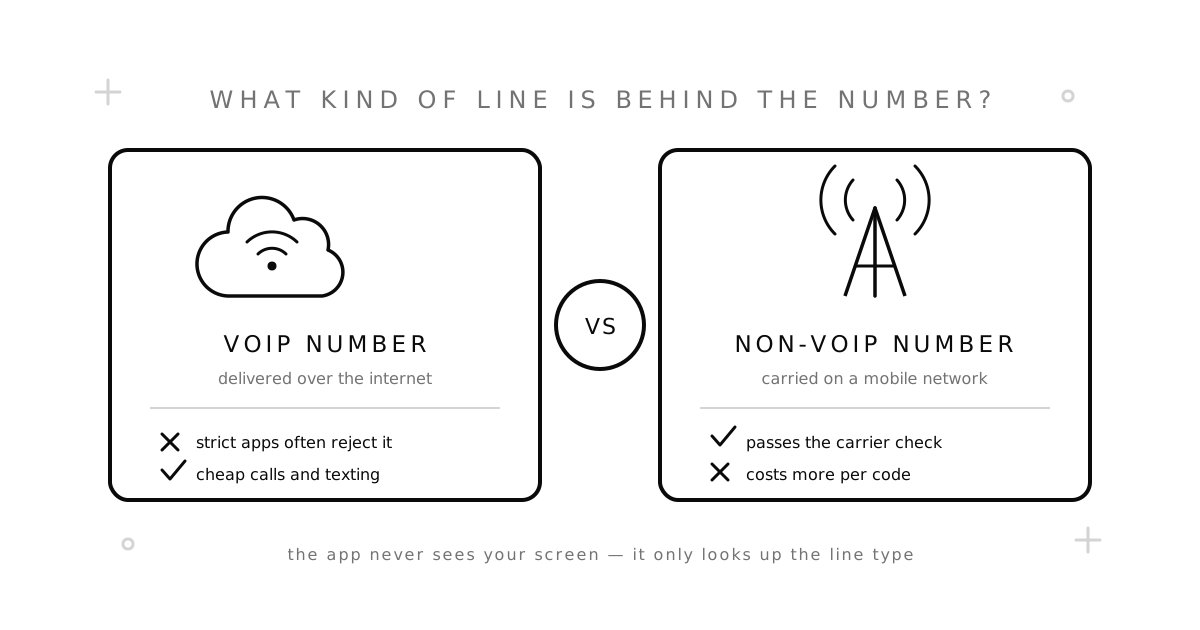
- VoIP number — a phone number that lives on the internet. Cheap or free, great for calls and texting people, and rejected by a noticeable share of apps for verification.
- Non-VoIP number — a number that sits on a mobile network, like the one in your pocket. Costs more, and behaves like a normal phone number when an app inspects it.
If an app has already rejected you once, you need a non-VoIP number. If nothing has rejected you, you may be paying for a distinction that does not affect you.
What each one actually is
VoIP stands for Voice over Internet Protocol. The number is assigned by a provider that routes calls and messages over the internet rather than over a carrier’s radio network. Second-number apps, softphones, and most free texting services work this way. Nothing about it is fake or illegitimate — plenty of businesses run their whole phone system on VoIP.
Non-VoIP usually means a mobile number: a range a mobile operator owns, reachable through the same network that delivers SMS to physical SIM cards. Landlines are also non-VoIP, but they cannot receive text messages, so for verification the useful non-VoIP number is a mobile one.
You will also see fixed and non-fixed VoIP. Fixed VoIP is tied to a physical address (an office system, say); non-fixed VoIP can be bought by anyone, anywhere, in seconds. Apps treat non-fixed VoIP with the most suspicion, because it is the cheapest to obtain in bulk.
How an app tells the difference
It looks the number up. Phone numbers are allocated in blocks, and public databases record which operator owns each block and what kind of line it is. A lookup takes milliseconds and returns things like the carrier name and the line type — mobile, landline, or VoIP.
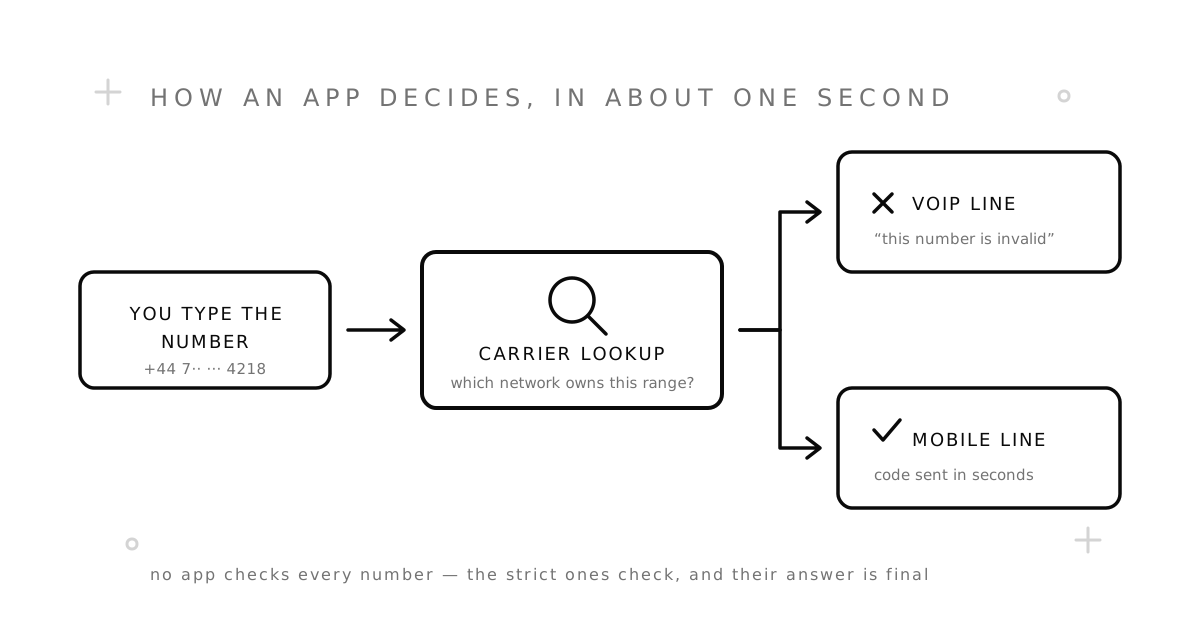
Two things follow from that. First, the check happens before any SMS is sent — which is why rejection is instant and no code ever arrives. Second, the answer depends on the number range, not on you, your device, or your IP address. Changing browsers or using a VPN does nothing here.
It also explains a common confusion: the same app can accept a virtual number from one country and reject one from another. Different ranges, different lookup results.
Side by side
| VoIP number | Non-VoIP (mobile) number | |
|---|---|---|
| Carried over | The internet | A mobile operator’s network |
| Cost | Free to a few dollars a month | Higher — per code, or per rental period |
| Accepted for strict verifications | Often refused | Usually accepted |
| Calls and outbound texting | Yes, that is what it is built for | Receiving SMS, on most virtual services |
| How fast you get one | Minutes | Minutes, if a provider has stock |
| Countries available | Mostly US, Canada, a few others | Wide — 100+ countries on SMSZ |
When a VoIP number is perfectly fine
- Talking to people. Calls and two-way texting with a number that is not your personal one — that is VoIP’s home turf.
- Newsletters, loyalty cards, marketplaces. Plenty of sites ask for a number and never inspect it.
- A long-lived second line. A monthly VoIP number you keep for years is cheaper than renting a mobile number for the same span.
When you need a non-VoIP number
- Messengers and social apps. WhatsApp, and other platforms that fight bulk registration hardest, check the line type routinely. See our WhatsApp verification guide.
- Financial and payment services. Many refuse VoIP outright as a matter of policy, not detection.
- Anything that already rejected you. A refusal is the clearest signal there is. Do not try the same category of number again.
The truth about “free non-VoIP numbers”
It is one of the most searched phrases in this niche, so let us be straight about it. Mobile numbers cost money to operate: an operator allocates the range, real network capacity carries the message. Nobody hands those out for free at scale.
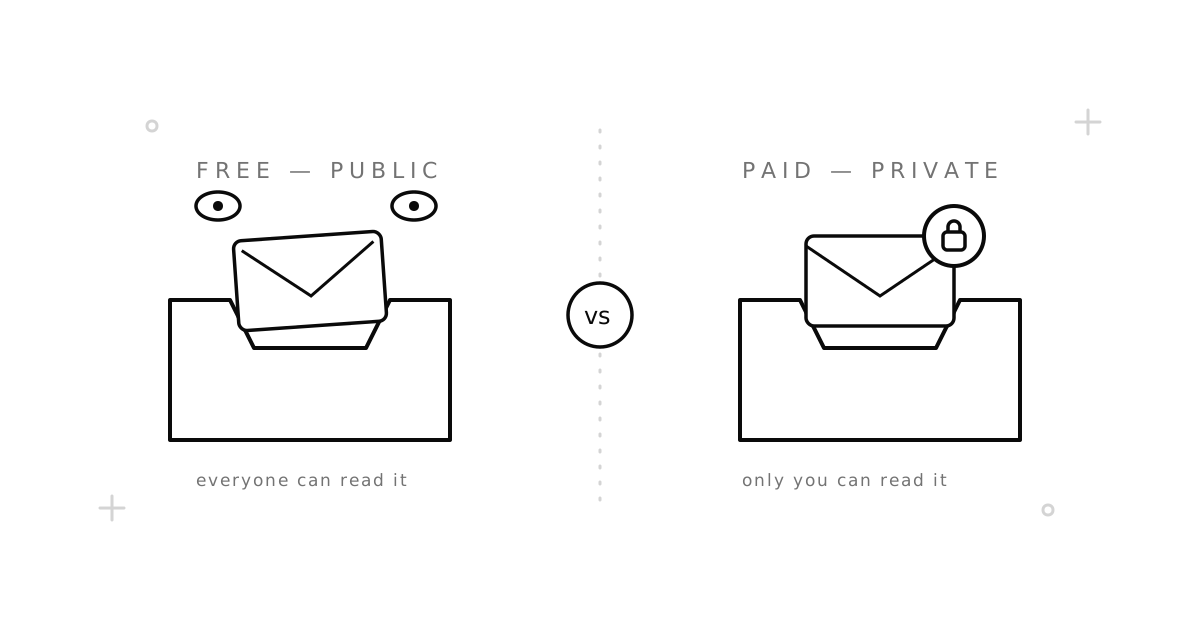
What actually exists is a small set of public mobile numbers whose inbox is shown openly on a web page — including our own free numbers. They are genuinely useful for checking whether an app sends SMS to virtual numbers at all. They are genuinely unsafe for any account you want to keep, because everyone can read the code. Our free vs. paid comparison walks through where that line sits.
Sites promising a free, private, non-VoIP number for verification are describing something that does not exist. Treat the promise as a warning sign.
How to get a non-VoIP number that works
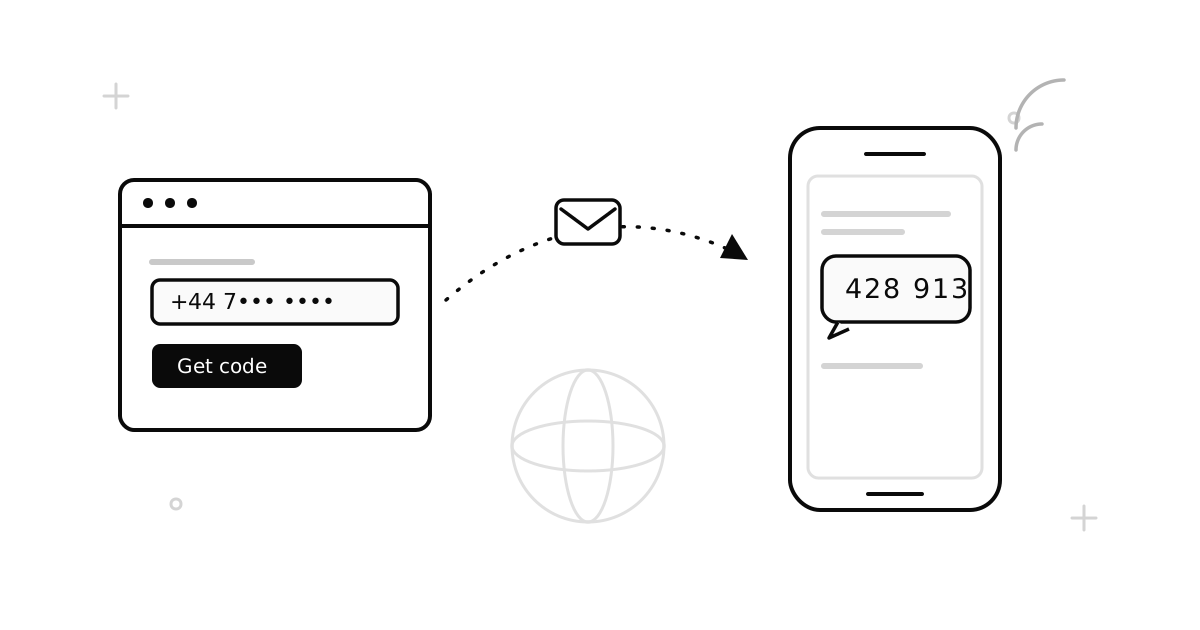
- Pick the service, then the country. On SMSZ you choose the app you are verifying first, so the number you get is one that has been delivering codes for that app.
- Check the price before you confirm. Popular app-and-country combinations cost more, because their stock is in demand. The price is shown up front, not after.
- Order, receive, done. The code appears in your dashboard. If no SMS arrives in time, the order cancels and your balance is refunded automatically — see the refund policy.
No provider — us included — can promise 100% acceptance. Ranges get flagged, apps change rules, and stock rotates. What a provider can promise is that you do not pay for a code that never came.
What to do when your number is rejected
- Change country, not browser. The lookup reads the number range. A different country is a different range — that is the actual fix.
- Do not retry the same range repeatedly. You will hit the app’s rate limit and add a cooldown to your problem.
- Check the money came back. A rejected number never receives a code, so the order should cancel and refund by itself.
- Consider a rental. If the app will ask for codes again later, a rental number saves you from repeating this.
Common questions
Is a virtual number the same as a VoIP number?
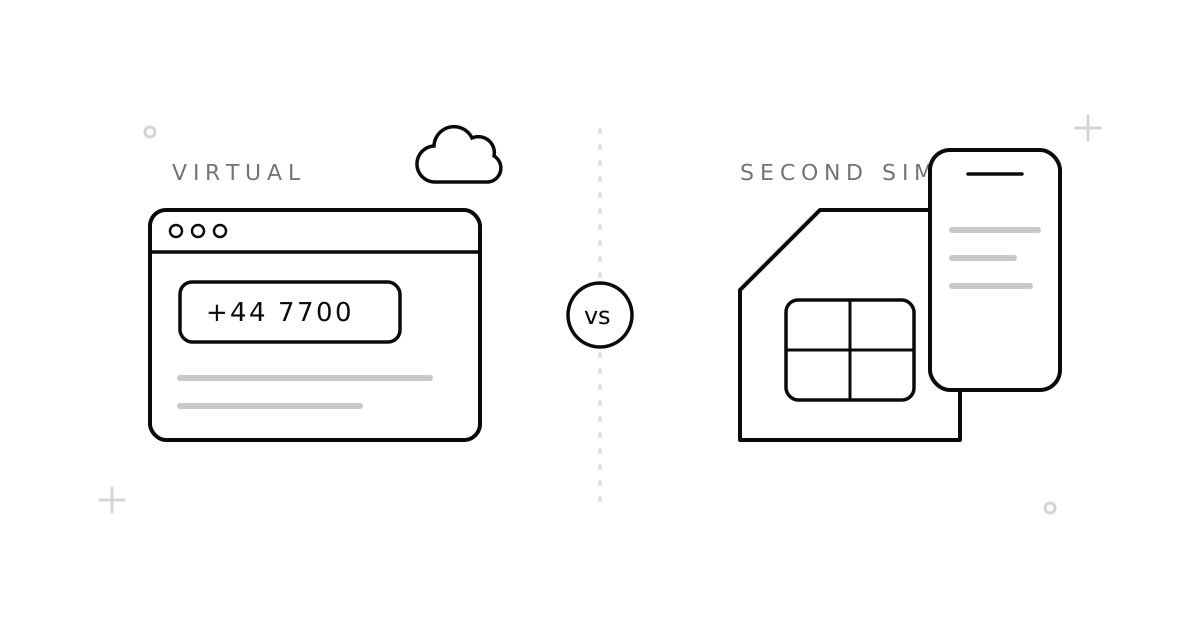
No, and this is where most confusion starts. “Virtual” means you use the number without a SIM card in your hand. That number can sit on a mobile network (non-VoIP) or on the internet (VoIP). SMSZ numbers are virtual, and they come from mobile ranges.
Can an app tell that I bought the number instead of owning a SIM?
Not from the lookup itself — it reports the line type and the operator, not who is holding the handset. What some apps do is flag ranges they have seen used heavily for signups. That is why a country that worked last month may not work today.
Is using a non-VoIP number legal?
Yes. Receiving SMS on a virtual number is legal in most countries; what matters is what you do with the account. Privacy, testing, and business use are fine. Fraud, spam, and ban evasion are not — see our Terms of Use.
Why do prices differ so much between countries?
Cost follows demand and supply. A country where a given app is heavily used, and where operator numbers are scarce, costs more. That is also why switching countries is often the cheapest way to solve a rejection.
How can I check a number’s line type myself?
Free carrier-lookup tools exist and will tell you the reported line type for a number. They are useful for understanding, less so for shopping — the number you are about to buy does not exist in your account yet.
Need a number that passes the check? Pick your service and country, or see how SMSZ works.