Free vs. Paid Temporary Phone Numbers: An Honest Comparison
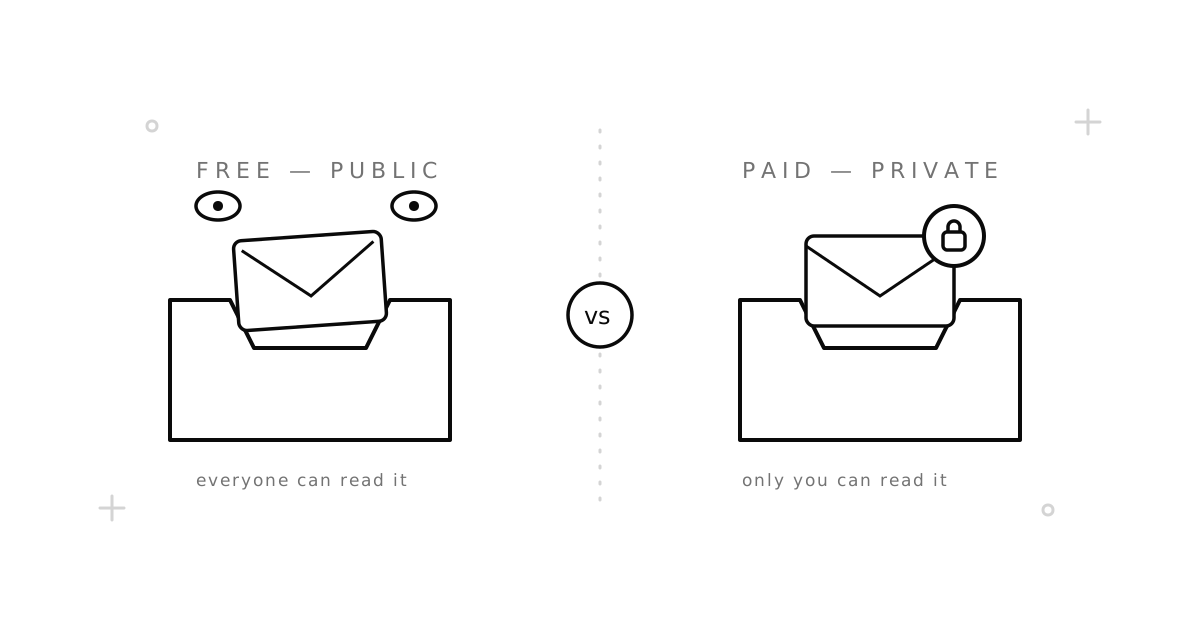
Search for a temporary phone number and you will find two kinds. Free sites show public numbers anyone can use, with the incoming SMS listed openly on the page. Paid services give you a private number that only you can read. Both receive verification codes — so when is free enough, and when is paying the smarter move?
What “free” really means
Free number sites — including our own free numbers page — are public inboxes. The number is shared by everyone, and every message it receives is visible to anyone who opens the page. That has three consequences:
- No privacy. Your code, the service name, and the time you signed up are public. Bots watch these inboxes and scrape codes in seconds.
- Low success rate. Popular apps know these numbers and block them. A free number that worked last month may be burned today.
- No account safety. If someone else opens the same inbox later, they can request a password reset for your account — and read the code.
None of this makes free numbers useless. It makes them a tool for jobs where none of those three things matter.
What you actually pay for
A paid temporary number is private: one customer at a time, and messages only you can see in your dashboard. On SMSZ, you pay per received code — and if no SMS arrives, the money returns to your balance automatically (see the refund policy). Because the numbers are not hammered by thousands of strangers, they are far less likely to be blocked by the app you are verifying.
Side by side
| Free public number | Paid private number | |
|---|---|---|
| Cost | Nothing | Small payment per received code |
| Who can read your SMS | Anyone on the internet | Only you |
| Chance the app accepts it | Low to medium — often blocked | High — and retries cost nothing |
| Safe for an account you will keep | No — anyone can reset it later | Yes, with a rental or app-based 2FA |
| Good for testing a signup flow | Perfect | Works too, just not necessary |
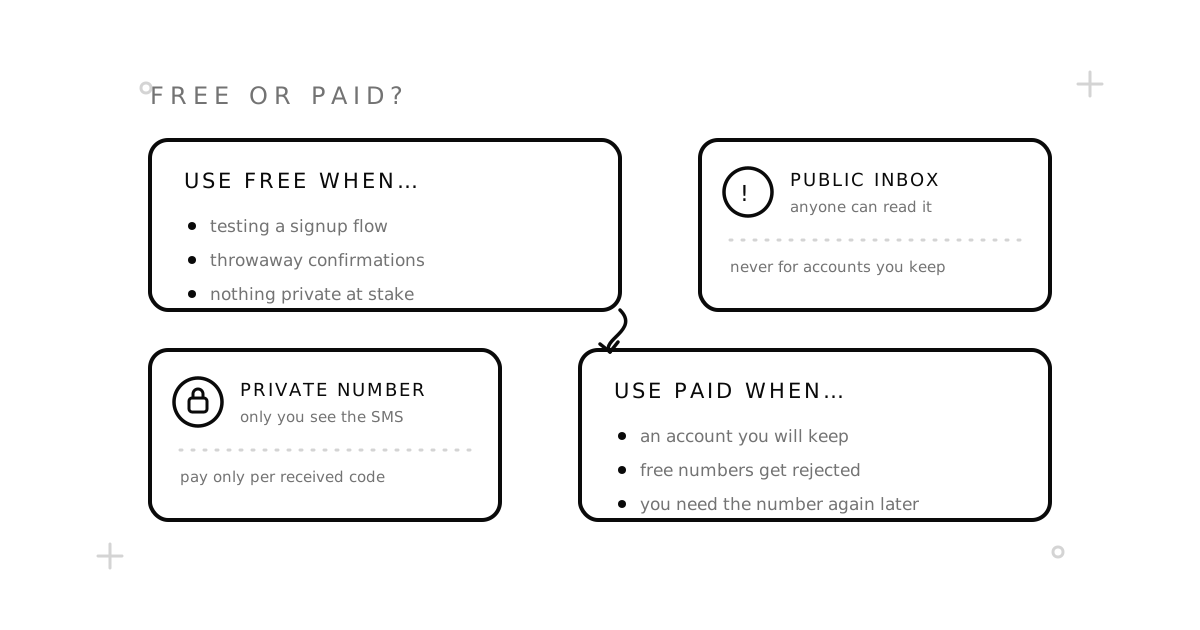
When free is the right choice
- Testing. Checking whether an app sends SMS to virtual numbers at all, before you spend anything.
- Throwaway confirmations. A download gate, a Wi-Fi portal, a coupon form — anything you will never log into again.
- Learning. Seeing how the whole verification flow works, risk free.
When paying is the right choice
- Any account you will keep. Telegram, WhatsApp, a marketplace seller profile. If losing it would hurt, the inbox cannot be public. Our Telegram guide walks through one example.
- When free numbers keep getting rejected. Ten minutes of failed attempts costs more than a paid code.
- When you need the number again. Future login codes need the number to still be yours — that means a rental, never a public inbox.
Common questions
Are free SMS sites safe to use?
Safe for testing, unsafe for accounts. The site itself is not the risk — the public inbox is. Anyone can see your code and take over whatever you registered with it.
Why do apps block free numbers?
Because thousands of people reuse them, often for spam signups. Apps respond by blocking the whole range. Paid private numbers see a fraction of that traffic, so they stay usable longer.
How much does a paid number cost?
It depends on the country and the service you are verifying — popular combinations cost more. You always see the exact price before you order, and you only pay when the code actually arrives.
Start free if you like — the public numbers are right there. When you need a private one, here is how it works.